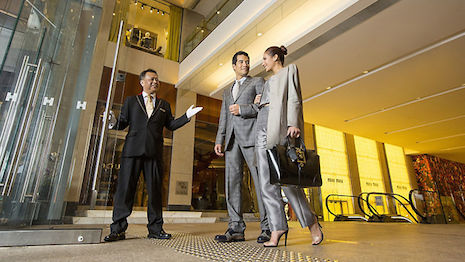
Mandarin Oriental Landmark Hong Kong
NEW YORK – Digital can help hospitality brands extend their relationship with guests beyond their stay, according to an executive from Mandarin Oriental speaking at Luxury Interactive 2016 on Oct. 19.
Consumers’ engagement with a particular hotel peaks during their time at the physical property, opening up opportunities for increased connections pre- and post-stay. While translating the atmosphere and service accessible at a hotel to the digital space can be a challenge, it is a necessary approach to reach consumers beyond a property’s walls.
“I think digital can extend the brand relationship,” said Jamie Cole, vice president of digital and ecommerce at Mandarin Oriental Hotel Group. “We need to be very sensitive about the brand and think very hard about how we do that in digital.
“Consumers have these very high expectations, and so we’ve got to be pretty good at this,” he said. “It’s not really something we can kind of do as an aside, it’s actually a core skill set for us as a brand moving forward.”
Loyalty drivers
Hotels sell an intangible product, with consumers unable to touch or experience a certain property before booking. Convincing them to buy then relies on a combination of loyalty and positioning.
Large hotel chains often use key tangible characteristics to create consistency across their properties, whether Westin’s “heavenly beds” or the free cookie at check-in guests can expect at Hilton’s DoubleTree.
With only 29 hotels, Mandarin Oriental operates differently, thinking of itself as a brand rather than a chain. Instead of dictating to its global properties, the group allows each hotel to create an atmosphere that calls to mind the Mandarin Oriental brand in a way that also reflects the local culture.
This could be integrated via the sights, sounds and smells in the lobby.

Mandarin Oriental Hong Kong’s Clipper Lounge
Another piece of the puzzle is the service. For a luxury brand, the expectations are high for the facilities, rooms and cuisine, along with the interactions with staff.
For Mandarin, the third factor is surprise and delight, giving the consumers something above what they expected.
Mr. Cole said the challenge is to translate these elements to digital channels. With consumers conducting a lot of research online before booking, a brand’s Web site is highly important.
Mandarin Oriental is in the process of redesigning its Web site to better communicate the experience. The brand’s booking engine is moving away from bulleted lists of room specifications to describing the spaces as a guest would.
This search function will also be influenced by data, as a guest’s previous purchases and those of similar clients feed the user suggestions that are most aligned with their needs.
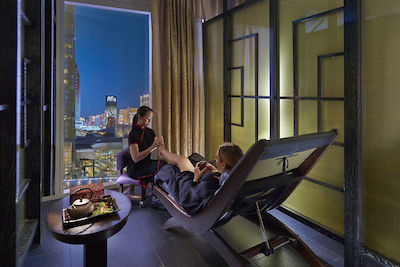
Spa at Mandarin Oriental Las Vegas
Outside of the Web site browsing experience, pre-stay engagement could include allowing the guest to order room service in the limousine between the airport and the hotel.
Digital also has a place during the stay, as brands roll out mobile technology that acts as a door key. While Mr. Cole said that this might not be right for Mandarin Oriental, he noted that it could benefit other brands.
Post-stay, brands can monitor user-generated content and spotlight posts, extending the relationship.
Hospitality 2.0
Luxury hotel brands are feeding the insatiable consumer desire for travel research with a number of digital tactics.
While consumer reviews on travel Web sites and word of mouth still hold sway over many travel decisions, hotels are becoming increasingly transparent to reel in the consumers busily browsing for their next trip. Microsites, mobile applications, social media feeds and content hubs are employing enhanced research tools to convince consumers to book (see story).
The need for post-purchase engagement is seen in other sectors as well.
A senior executive from luxury rental retailer Rent the Runway at the Luxury Interactive 2013 conference said that engaging consumers after the first sale boosts ecommerce sales.
The executive explained during the “Follow-Up Sale: Personalizing Your Post-Purchase Customer Communications” panel how the retailer continuously engages consumers. Brands and retailers without bricks-and-mortar locations must use engagement and personalization tactics to make up for the lack of an in-store experience (see story).
“Data is critical in terms of providing a service,” Mr. Cole said. “In order to provide consistent and really personalized experience, we need to have a 360-degree view of the guest.
“So that means then we can understand their preferences and their behaviors,” he said. “We can anticipate that by building business rules. We can offer a much more targeted and personal experience and we can do that across all brand touchpoints.”
from Travel and hospitality – Luxury Daily https://www.luxurydaily.com/mandarin-oriental-exec-hospitality-can-overcome-obstacle-of-virtual-perishable-product-via-digital/
via Your #1 Source to Finding Luxury & Designer Goods, Handbags & Clothes at or Below Wholesale: Click Here.

No comments:
Post a Comment